
Guide
Hot water tempering valve: what it does and when to check it
A hot water tempering valve mixes cold water into the hot water from your heater so the water reaching your shower, bath and basin is no hotter than 50°C, the NSW limit for most homes. The heater itself stores water much hotter than that. Manufacturers recommend checking the valve once a year. A valve that fails is replaced, not repaired.
It's worth knowing where yours is and when it was last checked, because it's the part that keeps very hot stored water away from your shower.
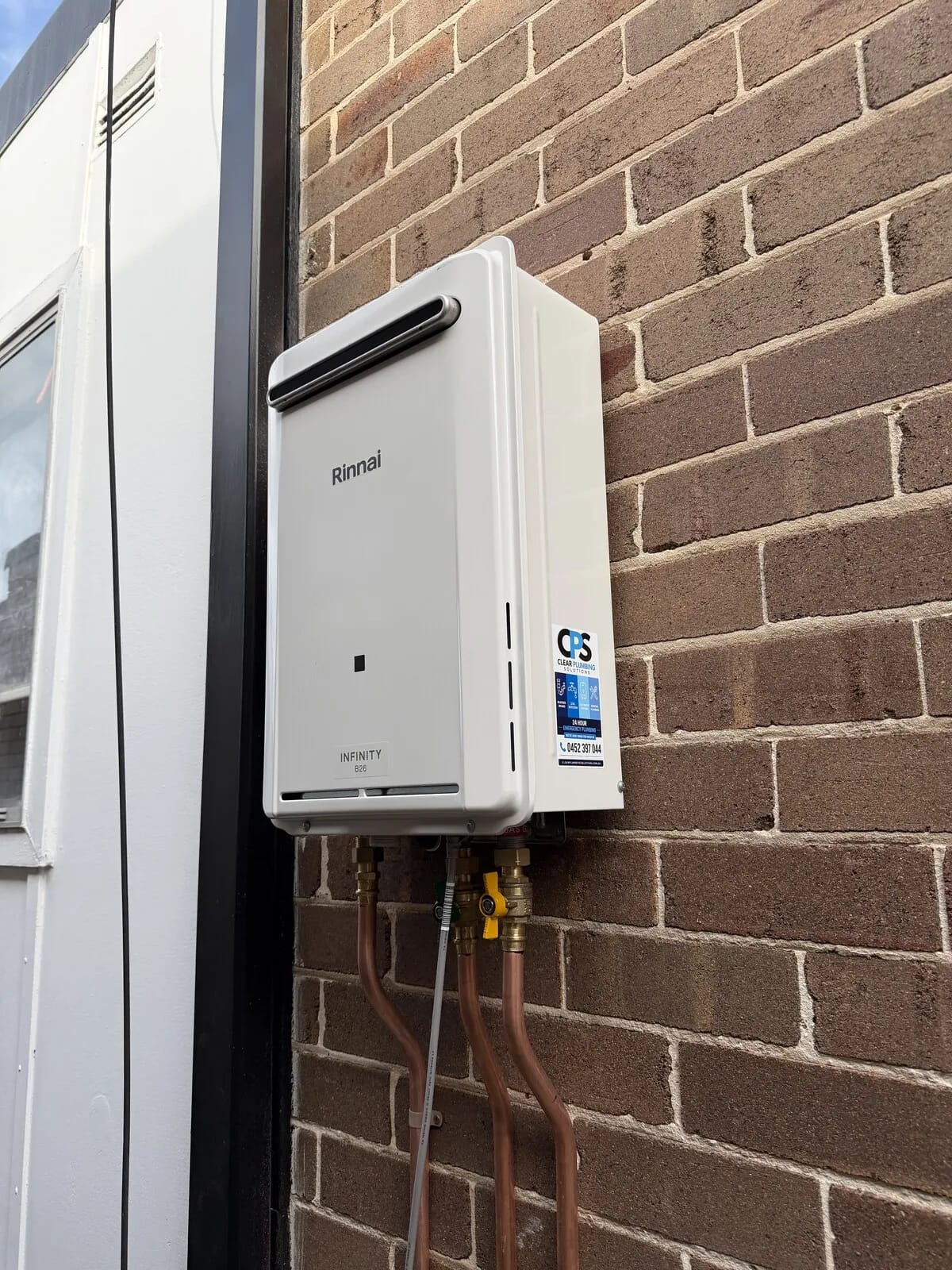
What does a tempering valve do?
A tempering valve has two inlets and one outlet. Hot water from the heater comes in one side, cold water comes in the other and a temperature-sensitive part inside blends them to a set temperature before the water goes on to the bathrooms.
The heater stores water at 60°C or hotter to stop legionella bacteria growing, as the Australian plumbing standard AS/NZS 3500.4 requires. Water that hot scalds quickly. The tempering valve cools it for the bathrooms. In the usual layout the kitchen and laundry get the hotter water and only the bathrooms get the tempered water.
Where is my tempering valve?
Usually on the hot water pipe close to the heater. It's a small valve with a hot inlet, a cold inlet and an outlet. Some are fitted away from the heater, closer to the bathrooms.
Do you need a tempering valve on a hot water system?
When a new hot water service is installed or an existing heater is replaced, NSW rules require a temperature control device for bathroom water. A tempering valve is one option, not the only one.
The NSW provisions of the Plumbing Code of Australia set the maximum delivery temperature for personal hygiene at "not more than 50°C" in most cases. For that limit the code allows four types of device: a thermostatic mixing valve, a thermostatically controlled tap, a tempering valve or a temperature limited water heater marked for a maximum of 50°C under AS 3498.
A stricter 45°C limit applies in places such as aged care, early childhood centres and schools. Those need a thermostatic mixing valve or a thermostatically controlled tap, not a tempering valve.
The rule applies to new hot water services and heater replacements, "regardless of the type or location of the heater." Replacing a part on an existing heater doesn't by itself mean a new device has to go in.
How do I know if my tempering valve is bad?
These are the signs that point to the valve:
- The shower runs hotter than it used to or swings between hot and cold
- Hot water at the bathroom is lukewarm even though the kitchen tap runs hot
- Hot water pressure is weak in the bathrooms but fine at the kitchen and laundry
- The valve or its fittings are dripping
Each of these can have other causes, such as a heater fault or low pressure in the house. A plumber measures the temperature at the outlet before blaming the valve. If every tap in the house is weak, hot and cold, the valve is less likely to be the cause.
Can you adjust the tempering valve?
A tempering valve can be adjusted. Setting it is licensed plumbing work, though. The NSW Government requires a licence for plumbing work whatever it costs. The plumber sets the valve, then measures the water at the outlet to make sure it's at or under the limit.
Don't turn the heater's thermostat down to make up for a valve that runs hot. The heater needs to store water hot enough to control bacteria. The tempering valve is there to do the cooling.
How often should a tempering valve be replaced?
Because NSW sets no replacement date, check the valve every year and replace it when it fails the check.
RMC's manual for its HeatGuard valves says: "We recommend the valve is checked annually to ensure its continued function." It adds that poor water quality or other difficult supply conditions may mean checking more often. The same manual says "The valve itself cannot be serviced. If the valve fails it must be replaced." The strainers and non-return valves on its inlets can be cleaned. That sometimes fixes a weak flow. Other makers set their own intervals and the instructions for your valve take priority.
Tempering valve, TMV, relief valve: which is which?
| Valve | What it does |
|---|---|
| Tempering valve | Mixes hot and cold to limit bathroom water to 50°C. Usually fitted near the heater |
| Thermostatic mixing valve (TMV) | Also limits water temperature. Required where the 45°C limit applies |
| Pressure and temperature relief valve | Fitted on the heater. Lets water out if temperature or pressure gets too high |
| Pressure limiting valve | Keeps the incoming mains pressure down so valves and fittings work properly |
Tempering valves in strata buildings and rentals
In an apartment building or a rental, nobody notices a tempering valve until someone complains about the shower. A yearly check in the maintenance round finds a failing valve before a tenant gets a hot shock. Our maintenance plumbing page covers how we work with landlords and agents. We service and replace tempering valves, so a valve that has drifted can be fixed on the same visit.
For valve servicing or replacement in an apartment building, speak to our strata plumber.
Frequently asked questions
Does a tempering valve affect the kitchen?
Usually not. In a typical layout the tempered water goes to the bathrooms only and the kitchen and laundry get hotter water direct from the heater.
Is a leaking tempering valve urgent?
A slow drip isn't usually an emergency, though it's worth having checked soon. If your hot water system itself is leaking, read leaking hot water system: what to do right now.